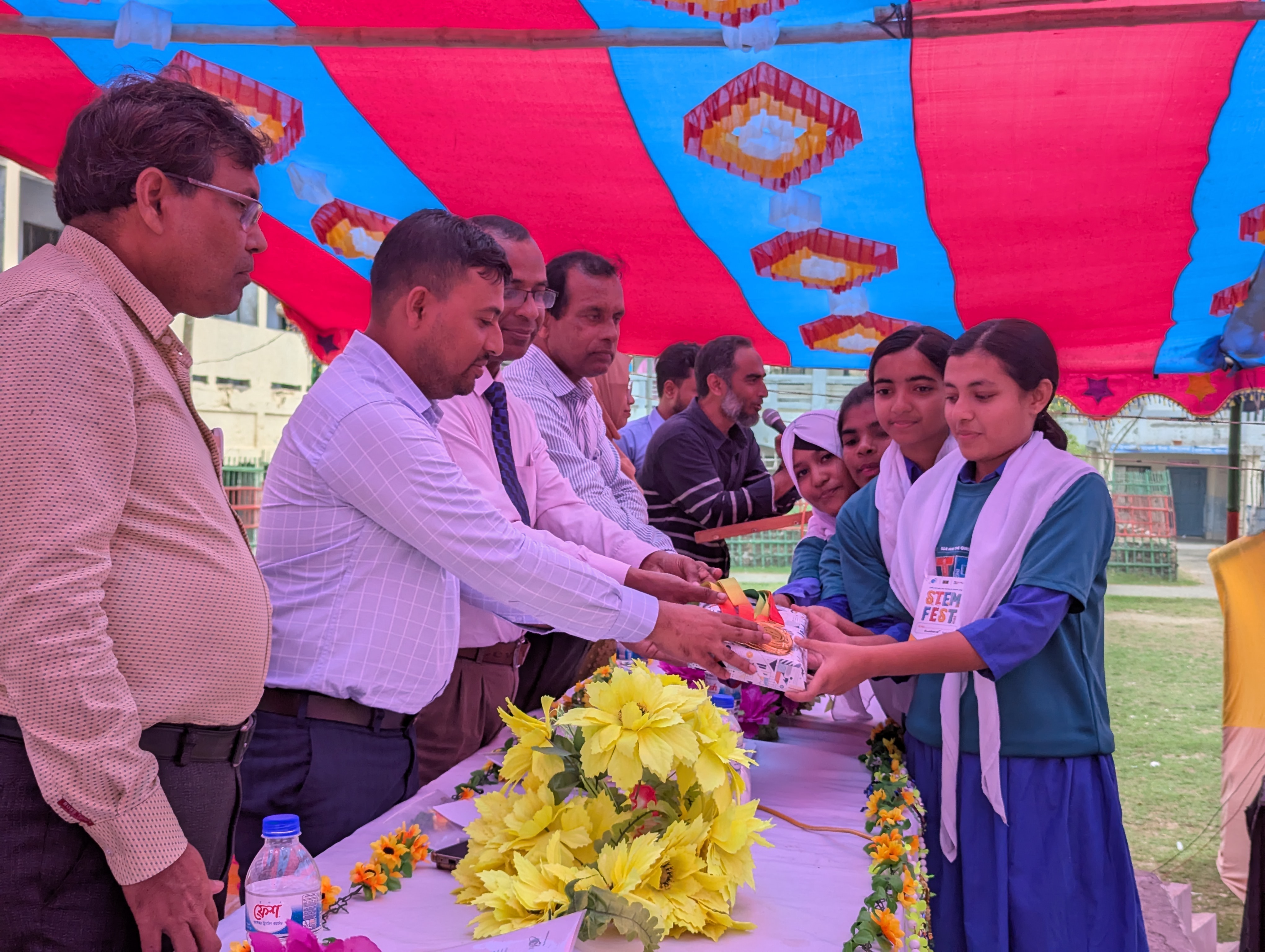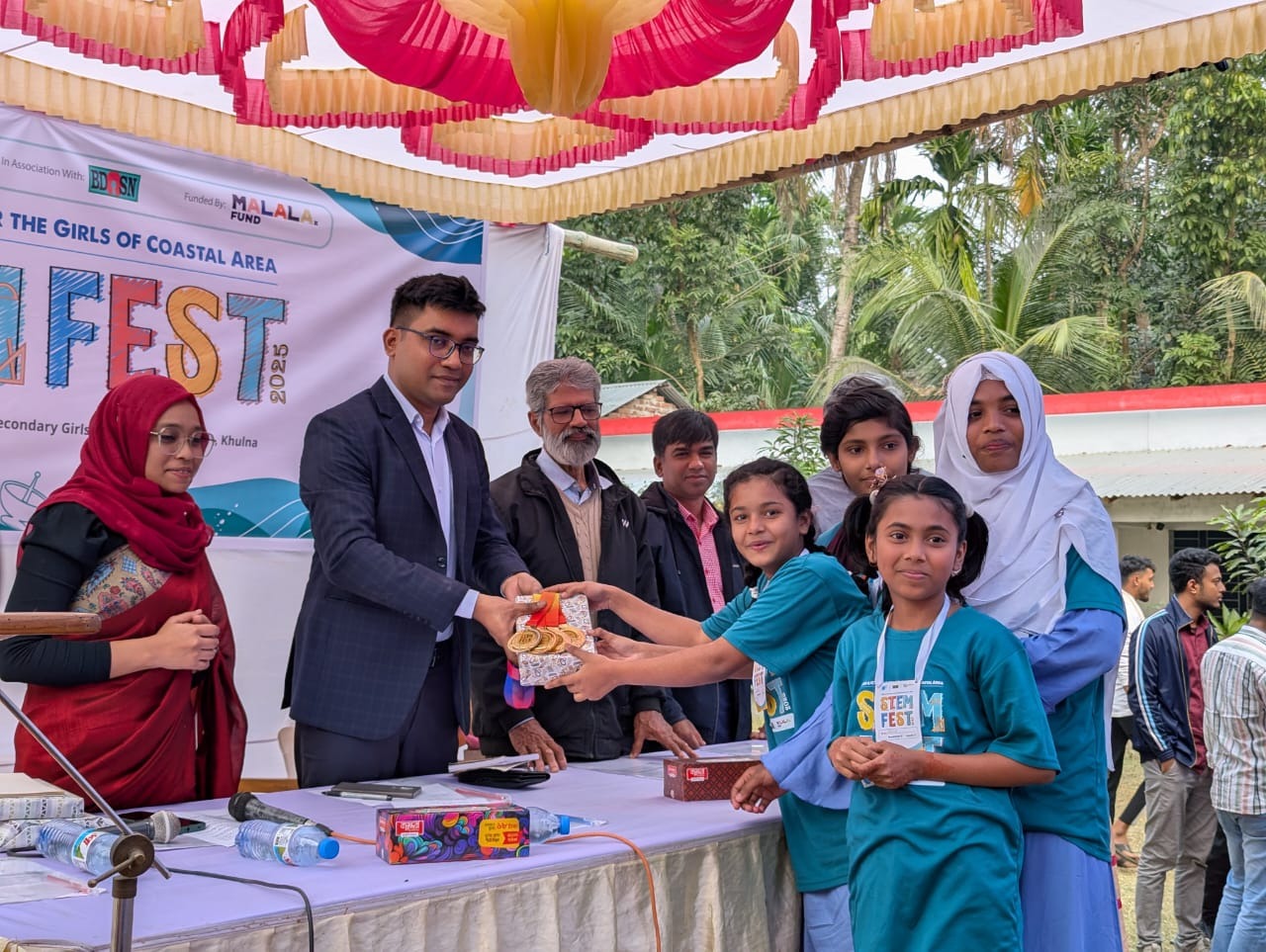

Advocacy Workshop Held in Khulna on Expanding STEM Education Opportunities for Coastal Girls

An advocacy workshop titled “Collaborative Efforts to Create STEM Education Opportunities for Coastal Girls” was held in Khulna on January 10, 2026 with the aim of increasing inclusion of adolescent girls from coastal areas in STEM (Science, Technology, Engineering, and Mathematics) and ICT education.
The workshop was organized by Bangladesh Open Source Network (BdOSN) in collaboration with Bangladesh Freedom Foundation (BFF) under the project “STEM and ICT Skills for the Girls of Coastal Area.” The primary objective of the workshop was to promote coordinated initiatives to enhance access to STEM and ICT education for adolescent girls in coastal regions and to strengthen their empowerment.
Teachers, parents, and students from four secondary schools in Khulna participated in the workshop. Representatives from NGOs working on girls’ empowerment, local influencers, and policymakers were also present. In total, around 75 participants attended the event.
In the keynote presentation, Rezual Islam, Project Coordinator, highlighted the activities and achievements of the project across three coastal upazilas, focusing on girls’ skill development in science and information technology. He emphasized that sustaining the positive changes observed among girls requires active participation from educational institutions, families, local government bodies, NGOs, and the private sector.
During group discussions and panel sessions, teachers, parents, local government representatives, and NGO leaders shared their perspectives on existing challenges and potential solutions to increase girls’ participation in STEM education. Sanjib Sarkar, Head Teacher of Naihaty Girls High School, noted that despite girls’ strong interest, the lack of technological equipment, trained teachers, and continuous support remains a major barrier. A parent shared, “We want our daughters to move forward in technology education, but the lack of opportunities and guidance often makes it difficult for us to take decisions.”
A ninth-grade student, Nishat Tasnim Jui, said, “What I learned hands-on through this project, I want to share with younger students. But I need deeper learning, and I’m not sure how to continue this after secondary school.”
In the final discussion session, Mr. S. A. Anwar-ul-Quddus, Upazila Secondary Education Officer, Mr. Md. Rakibul Islam Torofdar, Upazila Social Services Officer, Ms. Farhana Yasmin, Upazila Women Affairs Officer, Professor Dr. Helal An-Nahiyan from Khulna University of Engineering & Technology (KUET), and Mr. Munir Hasan, President of BdOSN and Education Champion Network Member of Malala Fund, shared their insights based on participants’ feedback.
Mr. Anwar-ul-Quddus stated, “Although girls perform better in examinations in our country, they fall behind in the race for career success. Empowering girls requires not only financial investment but also time, effort, and knowledge, along with creating real opportunities for them.”
Mr. Rakibul Islam Torofdar added, “I was both surprised and delighted to learn that our girls are participating in national-level science and technology competitions. There is no alternative to collective efforts if we want to sustain and expand such initiatives.”
In the closing remarks, the Executive Director of BFF said, “Only our collective commitment can help coastal girls become technologically skilled and prepared for the workforce.”
Professor Dr. Helal An-Nahiyan emphasized that skill-based development is now more important than rote academic results, stating, “The real success of this project will be achieved when girls from remote areas can create pathways to study at institutions like KUET.”
Mr. Munir Hasan remarked, “STEM education equips girls not only with technical skills but also with problem-solving abilities, confidence, and leadership. No girl should fall behind simply because she comes from a coastal region.”
The organizers concluded by stressing that there is no alternative to building strong linkages among policymakers and partners to ensure girls’ inclusion in STEM and ICT education in coastal areas. They emphasized that all stakeholders must play responsible roles in implementing the recommendations generated from the workshop.
It is worth noting that since 2023, Bangladesh Open Source Network (BdOSN), in collaboration with Bangladesh Freedom Foundation (BFF) and with support from the Malala Fund, has been implementing the “STEM and ICT Skills for the Girls of Coastal Area” project to foster interest and enhance skills in science and information technology among secondary school girls in coastal regions. The advocacy workshop was organized as part of this ongoing initiative.