
Girls Shaping the Digital Future: Prema’s Journey into Ethical AI Research
Some journeys begin with a dream moment of recognition that quietly changes everything. For Tabia Tanzin Prema, that moment came in Bangladesh—long before she started her PhD journey in the United States.
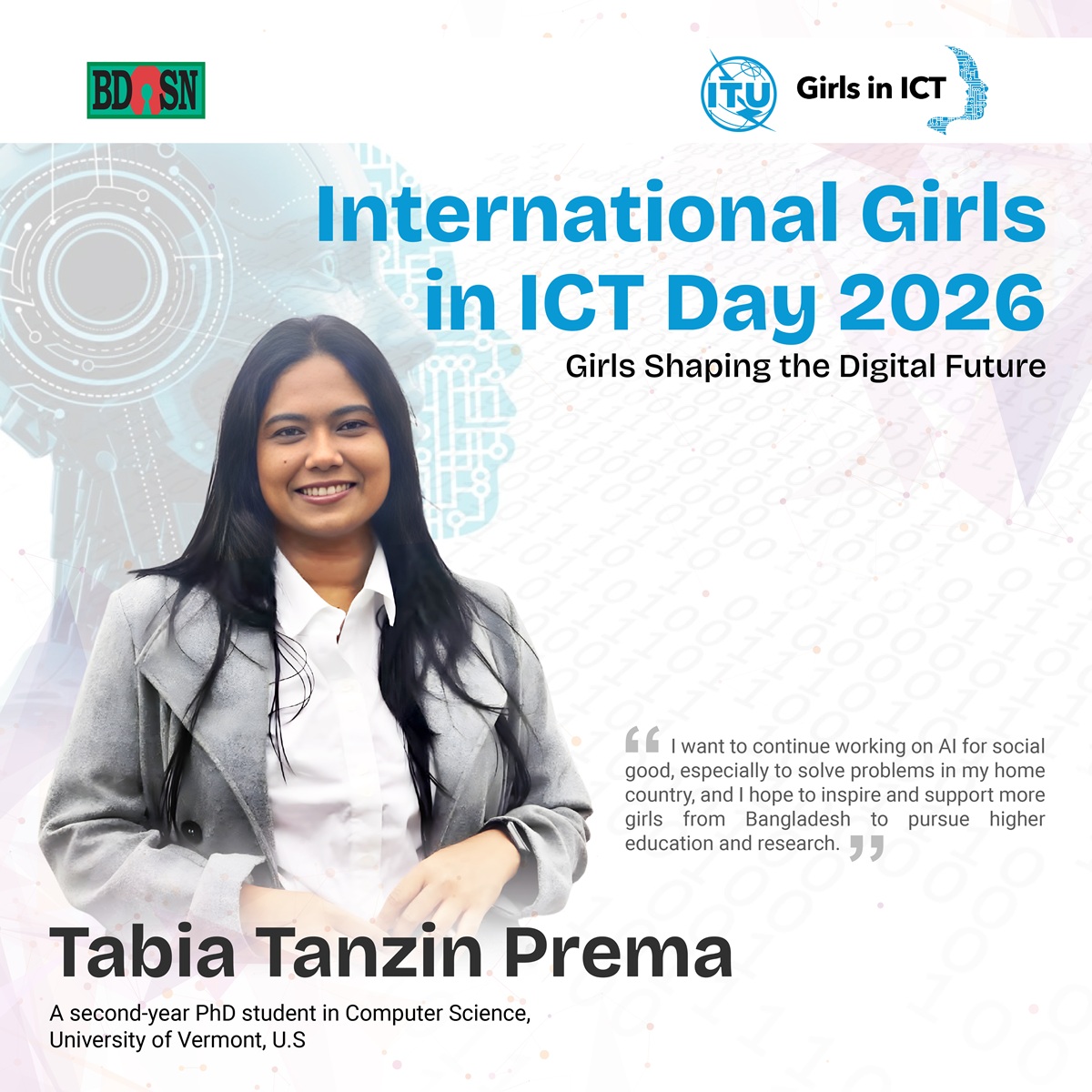
Today, Tabia is a second-year PhD student in Computer Science at the University of Vermont, working on interpretable AI—making artificial intelligence more ethical, transparent, and useful for social good. But her story starts much closer to home, as a Computer Science and Engineering student at Jahangirnagar University.
She had a dream to work in AI and contribute to modern technology. What she needed was the right platform to see that dream as something real. That first spark came through a Girls’ Innovation Bootcamp organized by Bangladesh Open Source Network (BdOSN).
“I first connected with BdOSN through the Girls Bootcamp, where my idea was selected as the best in my session, and the experience introduced me to many renowned business leaders, experts, educators, and innovators from Bangladesh.”
It was more than an award. It was a beginning. Later, she joined the Ada Lovelace Celebration, where she presented her poster and won the First Runner-Up prize.
“Following the achievement in Bootcamp, I participated in the Ada Lovelace Celebration, where I presented my scientific poster and won the First Runner-Up prize, while also attending sessions on higher studies that featured inspiring women pursuing PhDs.”
But what stayed with her most was something deeper—listening to women researchers talk about their journeys.
“Hearing their journeys became a turning point for me, as it motivated me to pursue research and ultimately aim for a PhD.”
From there, everything started to shift. She began building her path with quiet determination—seeking mentors, exploring research opportunities, and preparing for higher studies, even when the path felt uncertain.
“After that, I actively started building my research path, connecting with mentors, and preparing for higher studies despite challenges like navigating opportunities and building confidence.”
Every step was built on persistence. Looking back, she credits BdOSN for being one of the strongest early support systems in her journey.
“BdOSN played a crucial role in shaping my career direction by providing the initial exposure, mentorship, and belief that I could achieve this path.”
Today, that belief has carried her into the world of ethical AI research. As she continues her PhD journey, Tabia remains focused on advancing AI for social good. She also carries a long-term vision rooted in her experience—contributing to solving real-world problems in Bangladesh and encouraging more girls to pursue higher education and research, following a path similar to her own. And even now, her vision remains deeply rooted in Bangladesh.
“In the future, I want to complete my PhD and continue working on AI for social good, especially to solve problems in my home country, and I hope to inspire and support more girls from Bangladesh to pursue higher education and research.”